NFL Cash Out UK: Live Payouts and Betting Strategy
 Available in US
NFL Cash Out Mechanics and Bookmaker Payout Value
I’ve watched the cash out button cost more bettors more money than almost any other feature in modern sportsbook design. Not because it’s a bad tool. Because it’s a tool that’s wrong to use most of the time, presented in a way that makes it feel right to use most of the time. The big green panel that appears mid-game, offering you a guaranteed return on a bet that’s currently winning, is the single most effective conversion mechanism the industry has ever invented. And the maths underneath it almost always favours the house.
That’s the punchline up front. Cash out is not free money. Cash out is a re-bet at a price the book has chosen, with the book’s full margin baked into the new price. Sometimes pressing it is genuinely correct. More often, it’s the bookmaker monetising your anxiety. Mobile betting now accounts for roughly 78 percent of online sports wagers across European markets, and cash out is one of the central reasons mobile retention has been so strong — it’s the feature that turns every game into a continuous decision rather than a one-shot bet.
How cash out actually gets priced
The mechanic is simple in plain language. You bet 100 pounds on Team A to cover the spread, at a price that would return 195 pounds total if it wins. Mid-game, with Team A leading and the spread looking comfortable, the book offers you a cash out value of, say, 140 pounds. Press the button and you take the 140 pounds guaranteed, walking away from your original bet entirely.
The pricing engine behind that 140 pounds is doing two things. First, it’s calculating the current market value of your original bet — essentially asking what price the live spread market is offering on Team A’s remaining cover, and computing the equivalent guaranteed return. Second, it’s applying the book’s standard margin to that calculation. The result is always slightly less than what a no-vig hedge would produce. The book is taking a cut on every cash out, every time.
The size of that cut varies by book and by market, but it typically runs 5 to 10 percent of the theoretical fair value, sometimes more on illiquid markets or close-to-game-end situations. Press cash out 100 times, and you’ve paid a meaningful tax compared to what an equivalent bet-to-bet hedge through the live market would produce.
The interface design matters too. Cash out values are displayed prominently, with colour-coded changes and notifications when the value changes meaningfully. The phrasing is consistently positive: “Lock in your win”, “Secure your profit”, “Take the money now”. That’s not accidental. It’s the result of years of A/B testing on what wording produces the highest cash-out rates among bettors who have winning positions.
The maths of when cashing out makes sense
Strip away the psychology and the question becomes mathematical: is the cash out value higher or lower than the expected value of your remaining position? If it’s higher, take the cash. If it’s lower, ride.
The challenge is that the answer depends on your subjective probability that the bet wins from here, which is rarely the same as the book’s probability — and rarely the same as it was when you placed the bet. Three scenarios where I do consider cashing out:
First, when material new information has changed your read on the bet. Your starting quarterback has just been carted off, and you have him under for passing yards. The remaining game is now meaningfully different from the one you bet on. Cash out values likely haven’t fully adjusted to the news within the first thirty seconds, and pressing the button before the line catches up can capture genuine value.
Second, when the cash out value implies a higher probability of winning than your honest assessment. If your bet is 80 cents on the dollar to win from here in your view, and the cash out is offering 85 cents, that’s a positive expected value transaction. Take it. The market has overshot in your direction.
Third, when bankroll management or psychological state demands it. This isn’t strictly mathematical, but it’s real. If holding the position is going to disrupt your sleep, your work, or your discipline on tomorrow’s slate, the cost of cashing out at slightly below fair value may be worth paying. Knowing your own tilt threshold is a legitimate input.
What’s not a good reason to cash out: the bet is winning and you’re nervous. That’s not analysis. That’s the bookmaker monetising your nerves.
Partial cash out and what it’s really doing
Many UK books offer a partial cash out feature, which lets you take a portion of the cash out value while leaving the rest of the bet open. On the surface, this looks like the perfect compromise: lock in some profit, leave some upside. In practice, it’s the worst-of-both-worlds outcome in most situations.
The maths: a partial cash out is equivalent to closing a fraction of your bet at the cash out value and leaving the remaining fraction at full risk. If the cash out value carries the book’s standard 5 to 10 percent margin, you’re paying that margin on the portion you cash out. The portion you leave open carries no extra cost, but you’ve reduced your exposure to upside in exchange for paying margin on the cashed portion.
The decision tree is simple in theory. If you wanted full exposure, you wouldn’t cash anything. If you wanted full lockout, you’d cash everything. Partial cash out only makes sense if your subjective probability has shifted to a specific midpoint where you genuinely want exactly half exposure or three-quarter exposure. Most punters who use partial cash out aren’t doing that calculation. They’re hedging their psychological state, which is how the feature ends up costing money over time.
The exception, similar to full cash out, is when material news has shifted your read on a portion of the bet that’s still uncertain — then partial cash out can be a reasonable response. The general pattern, though: full cash out and full hold are usually correct; partial cash out is rarely the optimal play, even when it feels like one.
Cash out on parlays and same-game parlays
Cash out on parlays is where the maths get genuinely ugly for the bettor. The bookmaker margin on parlay cash outs is structurally higher than on single-bet cash outs, sometimes substantially. The reason is correlated risk: when you cash out a parlay with three legs already winning and one leg pending, the book has to price the remaining leg with extra uncertainty, and that uncertainty translates into more margin.
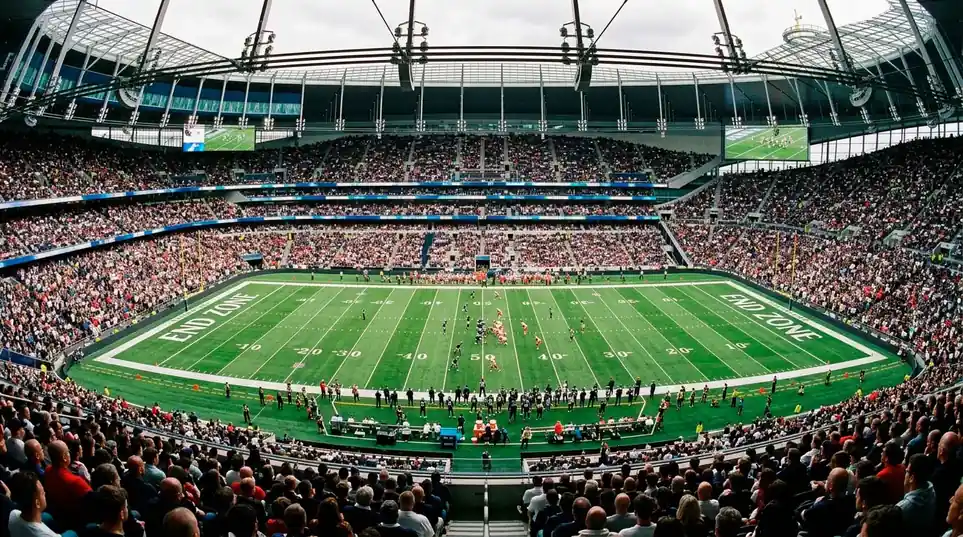
Same-game parlays are worse still. SGPs already carry hold rates above 15 percent at most books, and the cash out values on SGPs tend to apply the standard margin on top of an already-elevated baseline. Roger Goodell, the NFL commissioner, has spoken about the league’s expansion of international windows: “I do believe we can get to 16 games. Then you’d be in 16 different markets, or you might double up like we’re doing in the UK right now.” The growth of NFL viewership in the UK — driven by the international slate, the Channel 5 free-to-air partnership, and the league’s broader push to expand to 15-plus million UK fans — has pushed SGP betting volume up significantly. Cash out features on those SGPs are part of why the books love them.
The practical advice on parlay cash out: be even more sceptical than on single bets. The margin you’re paying is higher, the uncertainty in the remaining legs makes the calculation harder, and the psychological pressure to lock in gains is more intense because parlays produce dramatic value swings late. If you’re going to cash out a parlay, do it with explicit awareness that you’re paying premium margin to do so. My broader look at NFL parlay strategy for UK bettors covers the structural maths that makes this all so expensive.
The discipline that makes cash out a useful tool
Used correctly, cash out is a real piece of the betting toolkit. Used reflexively, it’s a slow leak in your bankroll. The difference is process, not luck.
I have a personal rule: I don’t look at cash out values unless something specific has changed. If the game is unfolding roughly as I expected when I placed the bet, the cash out value is information I don’t need and shouldn’t act on. If material news arrives mid-game — an injury, a quarterback change, a weather shift — I’ll check the cash out value to see whether the market has fully repriced. Sometimes it has, in which case there’s no advantage to cashing out. Sometimes it hasn’t, in which case the cash out value can capture a brief window of mispricing.
The other discipline: I commit to the bet at placement. If I wouldn’t bet this position again at the current cash out value, I shouldn’t be holding it. If I would bet it again at that value, I shouldn’t be cashing it out. The cash out decision is a re-betting decision, framed as a take-the-money decision, and treating it as the former rather than the latter solves most of the problem.
Is cashing out always a bad idea?
No, but it’s much more often a bad idea than the interface suggests. Cash out values carry the book’s standard margin, which means the price you receive is structurally below fair value. There are legitimate reasons to cash out — material news has changed the bet, the cash out value implies a higher probability than your honest assessment, or your psychological state demands the lockout — but they apply less often than the average bettor presses the button.
What is partial cash out and when does it make sense?
Partial cash out lets you close a portion of your bet at the cash out value while leaving the rest open. It’s mathematically equivalent to closing a fraction of the bet at the marked-down value and holding the rest at full risk. It rarely makes sense in pure expected-value terms because you’re paying margin on the cashed portion, but it can be reasonable when material news has shifted your read on a portion of the bet that remains uncertain.
Prepared by the nfl Betting ods editorial staff.