NFL Weather Impact Betting UK: Wind and Line Value
 Available in US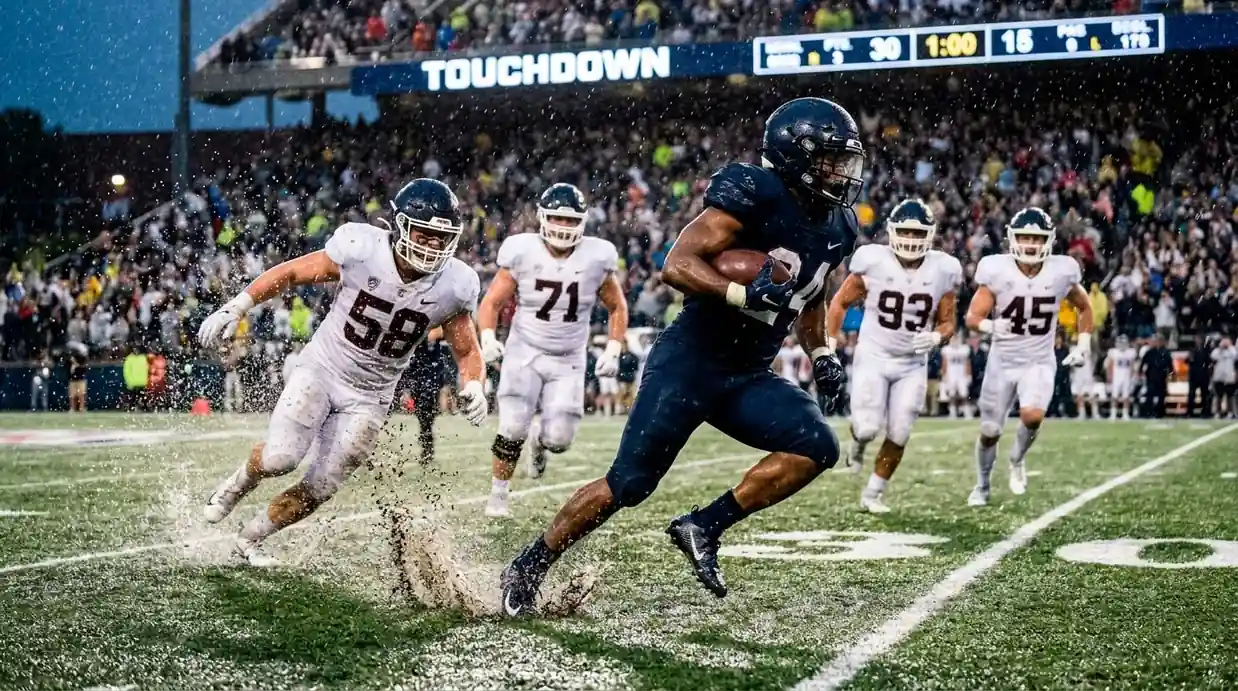
Table of Contents
NFL Weather Impact Metrics and Totals Betting Adjustments
I once spent three days building a model for an NFC North late-season game between Green Bay and Minnesota. Offensive efficiency, defensive efficiency, recent injury data, snap counts, the works. My number on the total was 47.5. Wednesday morning, the forecast for Sunday shifted to sustained 28 mph winds at Lambeau Field. The line dropped from 47.5 to 39.5 over 48 hours, and my elaborate model became irrelevant. The wind moved the total by eight points; my entire analytical edge was worth maybe one point in either direction. That’s the rough hierarchy of NFL betting inputs: weather first, everything else later.
Weather is the most underrated variable for casual NFL punters and the most respected variable for analytical ones. UK bettors watching American coverage often see weather mentioned briefly as colour commentary; the actual betting markets treat it as the largest single mover of totals and a meaningful mover of spreads. Understanding which weather variables matter, which don’t, and how the books price them is one of the highest-yield analytical investments you can make.
Wind: the dominant variable nobody respects enough
Wind is the king of NFL weather effects on betting. It’s not even close. Sustained winds above 15 mph have measurable effects on passing accuracy, kicking distance and accuracy, and overall scoring. Sustained winds above 20 mph reshape entire game scripts. Above 25 mph, the passing game effectively dies and the total drops by 5-plus points from baseline.
The mechanism is that long throws become unreliable, which collapses the deep passing game. Quarterbacks shift toward shorter, lower-risk throws that produce fewer touchdowns and more punts. Field goals beyond 45 yards become coin flips at best. Kickers stop attempting kicks they’d normally attempt, which means red-zone trips that would have produced field goals now produce turnovers on downs or punts. The cumulative effect on totals is large.
The book’s pricing engine adjusts for wind, but the adjustment timing matters. Wind forecasts firm up in the 24 to 48 hours before kickoff. Books that move quickly on weather forecasts catch most of the effect; books that move slowly leave windows where the line lags the actual conditions. UK punters who check forecasts on Friday or Saturday morning sometimes find lines that haven’t yet absorbed the latest wind projections, particularly at smaller books with less sophisticated weather modelling.
The historical pattern: outdoor NFL games with sustained winds above 15 mph go under the total at meaningfully higher rates than the implied probability suggests, even after the book’s wind adjustment. The reason is that the books typically apply a conservative wind discount, and the actual scoring suppression in heavy wind exceeds the priced-in adjustment. This is one of the few persistent edges I’ve seen in NFL totals betting from the UK, and it survives most attempts to arbitrage it.
Cold weather: smaller effect than people assume
Cold weather gets a lot of attention in NFL coverage — “the Frozen Tundra”, “a -10 wind chill at Buffalo” — but the actual betting impact is more modest than the hype suggests. Pure cold, without wind, has limited effect on game scoring. NFL teams play in cold weather every December and January, players are conditioned to it, and the offensive systems adjust without major efficiency loss.
What matters more is the combination of cold and wind. A 32-degree game with calm conditions plays roughly like a 50-degree game with calm conditions, give or take a half-point on the total. A 32-degree game with 20 mph winds plays meaningfully under the calm-weather projection, with most of the effect coming from the wind, not the cold.
The home team’s adaptation matters. Teams that play half their schedule in cold conditions — Green Bay, Buffalo, Chicago, Cleveland, New England — typically perform near their season averages in their home cold weather. Teams visiting from warm-weather climates or domes can show modest performance discounts, particularly early in the game before they adapt to the conditions. The aggregate effect is usually 1 to 2 points on the spread, smaller than the wind effect on totals.
The long-running myth that “cold weather games go under” is partly true and partly misleading. They go under when wind is also a factor, which is often. They don’t reliably go under in calm cold conditions. The market has caught up to this distinction, and the residual edge for betting unders in cold-weather games specifically (with calm conditions) is small to zero.
Rain and snow: variable effects depending on conditions
Rain is the variable with the most variable impact. Light rain has almost no measurable effect on NFL scoring or game flow. Heavy rain can suppress totals by 2 to 4 points, primarily through ball-security issues and kicking accuracy. Sustained heavy rain combined with wind — the classic Northeast November storm — can suppress totals by 5 points or more, mostly through the combined effects of poor passing conditions and footing problems.
Snow follows a similar pattern but with one important difference. Light snow on a frozen field plays similar to rain, with modest scoring suppression. Heavy snow on an unfrozen, slushy field can produce wild outcomes — sometimes very low-scoring as both teams struggle to move the ball, sometimes surprisingly high-scoring as defensive players struggle to maintain footing on coverage and tackling. The variance around heavy-snow totals is higher than around heavy-rain totals, which makes the betting markets harder to price.
Domes and retractable-roof venues with closed roofs eliminate weather variance entirely. The structural premium on totals at indoor venues runs 1 to 2 points higher than equivalent matchups outdoors, even before specific weather effects. With the NFL fielding a record seven international games in 2025 — including London games at the open-air Wembley and the typically-open Tottenham venue, plus newer European venues — the indoor/outdoor question becomes part of the line analysis for international fixtures.
How books price weather and where they get it wrong
Modern NFL pricing engines incorporate weather forecasts directly into spread and total models. The standard approach: pull weather forecasts from multiple meteorological sources, weight by forecast confidence and time-to-kickoff, and apply standardised adjustments to projected scoring based on forecast variables.
The systematic weaknesses in this approach are predictable. Books over-adjust for cold weather without wind — they apply discount even when calm conditions don’t justify it, creating opportunities to back overs in cold-weather calm-condition games. Books under-adjust for marginal wind conditions — sustained winds in the 12 to 18 mph range often produce more scoring suppression than the priced-in adjustment, creating opportunities to back unders. Books struggle with snow forecasts that are uncertain in their final form — “chance of snow” forecasts get partial adjustments that fail to capture the binary nature of the actual outcome.
The timing edge is real for UK punters specifically. NFL forecasts firm up overnight in US Eastern time, which is morning in the UK. Lines that haven’t yet incorporated the latest forecast updates by UK Saturday morning sometimes lag the actual market view. Checking forecasts before checking lines, rather than the other way around, can occasionally find brief windows of mispricing.
The consumer protection framing applies here too — as Bill Miller, the AGA chief executive, has put it: “Legal sports betting enhances the fun and friendly competition that make NFL games and traditions even more special. With strong consumer protections and a shared commitment to responsibility, the legal, regulated sports betting industry encourages all football fans to have a game plan before placing a bet.” Having a weather-aware game plan, rather than reacting to forecasts emotionally, is the discipline that separates analytical betting from chasing storms.
Practical weather-aware betting routine
The framework I use on Sunday mornings before placing bets on outdoor games:
Check the wind forecast first, before anything else. Specifically, the sustained wind speed for the hour of kickoff, not the daily average. Sustained 15-plus mph winds shift my view toward unders and game-flow scenarios that suppress scoring. Sustained 20-plus mph winds shift my view aggressively toward unders.
Check the precipitation forecast second. Heavy rain expected during the game window suppresses totals; light rain doesn’t. Snow forecasts need careful reading — “chance of snow” doesn’t mean snow will fall, and the timing of any snow during the game matters more than the daily total.
Check the temperature forecast third, but treat it as a smaller variable than wind or precipitation. Calm cold weather has limited betting impact; cold combined with wind compounds the wind effect.
Check the indoor/outdoor venue last. Domes eliminate weather variance entirely. Retractable-roof venues need confirmation of whether the roof will be open or closed during the game. Outdoor venues require the full weather analysis.
Then check whether the line has fully absorbed the weather forecast. If the total has moved meaningfully in the direction the weather predicts, the value is reduced. If the total hasn’t moved despite a clear weather signal, there’s still potential value to capture. My deeper look at NFL totals covers the broader pricing dynamics for over/under markets, and weather is one of the most consistent drivers of total mispricings worth knowing about.
How much does wind actually move an NFL total?
Sustained wind above 15 mph at an outdoor stadium typically moves totals by 2 to 4 points compared with calm conditions. Sustained winds above 20 mph can move totals by 5 to 7 points, and winds above 25 mph essentially shut down the passing game and produce totals that are 7 to 10 points below the calm-weather baseline. Wind is the single largest weather variable for NFL totals, larger than cold or rain.
Do cold weather games reliably go under the total?
Only when wind is also a factor. Pure cold weather with calm conditions has limited effect on NFL totals — typically half a point or less of suppression — because teams adapted to cold conditions perform near their season averages. The popular myth that cold weather games go under is partly true (because cold often coincides with wind) and partly misleading (because cold without wind doesn’t reliably suppress scoring). The market has caught up to this distinction, leaving limited residual edge.
Should I bet on weather-affected NFL games or avoid them?
Bet selectively. Heavy weather creates pricing opportunities, particularly when the line hasn’t fully absorbed the latest forecast. The systematic edges tend to favour the under in heavy-wind outdoor games, where books often under-adjust for the scoring suppression that strong winds produce. Avoid betting weather games where the line has already moved meaningfully in the direction the weather predicts — the value is largely captured already, and the residual edge isn’t worth the variance.
Written by the editors at nfl Betting ods.